Occupancy Simulation –
Modern burglar alarm systems across Wetherby are increasingly becoming part of wider smart home security ecosystems. Homeowners now want systems capable of not only detecting intrusion attempts, but also helping deter criminals before entry is even attempted.
One feature becoming increasingly popular within modern domestic security systems is smart occupancy simulation.
This technology allows connected security systems to simulate normal household activity when the property is empty, helping create the impression that somebody is still at home.
What Is Smart Occupancy Simulation?
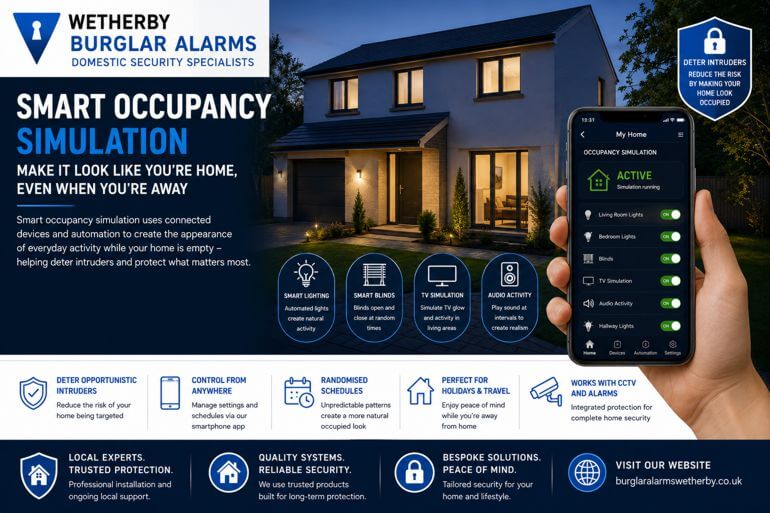
Occupancy simulation uses connected smart devices and automation routines to imitate normal household behaviour while homeowners are away.
This may include:
- lighting schedules
- smart blind operation
- TV simulation lighting
- timed audio activation
- and app-controlled automation
working alongside the burglar alarm system.
Visible Activity Can Help Deter Intruders
Many opportunistic burglars prefer:
- unoccupied homes
- low-risk targets
- and properties showing minimal activity
Simulated occupancy can help reduce the appearance that the property is vacant for extended periods.
Holiday Periods Create Increased Vulnerability
Homes left empty during:
- holidays
- work travel
- weekends away
- or overnight absences
may appear more vulnerable if:
- lights remain off
- curtains stay unchanged
- or activity patterns disappear completely.
Smart simulation systems help create more realistic occupancy patterns.
Modern Systems Avoid Predictable Timers
Traditional plug-in timers often followed:
- rigid schedules
- repetitive timing
- and obvious patterns
Modern smart systems can instead create:
- varied lighting routines
- randomised activity patterns
- and occupancy-based automation
to improve realism.
Smartphone Apps Improve Flexibility
Many modern burglar alarm systems now integrate with:
- mobile apps
- smart lighting
- CCTV
- and home automation platforms
allowing homeowners to:
- activate occupancy modes remotely
- adjust schedules
- and manage devices from anywhere.
CCTV And Smart Security Work Together
Occupancy simulation increasingly forms part of wider connected home protection that may include:
- CCTV
- smart alarms
- motion detection
- and remote notifications
helping improve both deterrence and awareness.
External Lighting Remains Important
Smart occupancy systems may also integrate with:
- external security lighting
- pathway illumination
- driveway lighting
- and entrance lighting
to help reinforce the appearance of occupancy.
Wireless Smart Devices Simplify Installation
Modern wireless smart home products allow occupancy simulation systems to be installed with:
- minimal disruption
- flexible expansion
- and app-based management
making them suitable for:
- existing homes
- renovated properties
- and extensions.
Professional Configuration Improves Realism
Effective occupancy simulation depends on:
- realistic schedules
- suitable device positioning
- and sensible automation behaviour
Poorly configured systems may appear:
- repetitive
- unnatural
- or obviously automated.
Modern Home Security Is Increasingly Preventative
Domestic security increasingly focuses on:
- deterrence
- prevention
- and reducing opportunity
rather than relying solely on alarm activation after intrusion occurs.
For homeowners in Wetherby, professionally installed burglar alarm systems with smart occupancy simulation help provide:
- improved visual deterrence
- smarter home automation
- connected property awareness
- and greater peace of mind
As smart home technology continues evolving, occupancy simulation is becoming an increasingly valuable part of modern domestic burglar alarm systems.
Frequently Asked Questions
What is occupancy simulation?
It uses smart home automation to create the appearance that somebody is home while the property is empty.
Why is occupancy simulation useful?
It may help deter opportunistic intruders by reducing the appearance of vacancy.
Can occupancy simulation integrate with burglar alarms?
Modern burglar alarm systems across Wetherby are increasingly becoming part of wider smart home security ecosystems. Homeowners now want systems capable of not only detecting intrusion attempts, but also helping deter criminals before entry is even attempted.
One feature becoming increasingly popular within modern domestic security systems is smart occupancy simulation.
This technology allows connected security systems to simulate normal household activity when the property is empty, helping create the impression that somebody is still at home.
What Is Smart Occupancy Simulation?
Occupancy simulation uses connected smart devices and automation routines to imitate normal household behaviour while homeowners are away.
This may include:
- lighting schedules
- smart blind operation
- TV simulation lighting
- timed audio activation
- and app-controlled automation
working alongside the burglar alarm system.
Visible Activity Can Help Deter Intruders
Many opportunistic burglars prefer:
- unoccupied homes
- low-risk targets
- and properties showing minimal activity
Simulated occupancy can help reduce the appearance that the property is vacant for extended periods.
Holiday Periods Create Increased Vulnerability
Homes left empty during:
- holidays
- work travel
- weekends away
- or overnight absences
may appear more vulnerable if:
- lights remain off
- curtains stay unchanged
- or activity patterns disappear completely.
Smart simulation systems help create more realistic occupancy patterns.
Modern Systems Avoid Predictable Timers
Traditional plug-in timers often followed:
- rigid schedules
- repetitive timing
- and obvious patterns
Modern smart systems can instead create:
- varied lighting routines
- randomised activity patterns
- and occupancy-based automation
to improve realism.
Smartphone Apps Improve Flexibility
Many modern burglar alarm systems now integrate with:
- mobile apps
- smart lighting
- CCTV
- and home automation platforms
allowing homeowners to:
- activate occupancy modes remotely
- adjust schedules
- and manage devices from anywhere.
CCTV And Smart Security Work Together
Occupancy simulation increasingly forms part of wider connected home protection that may include:
- CCTV
- smart alarms
- motion detection
- and remote notifications
helping improve both deterrence and awareness.
External Lighting Remains Important
Smart occupancy systems may also integrate with:
- external security lighting
- pathway illumination
- driveway lighting
- and entrance lighting
to help reinforce the appearance of occupancy.
Wireless Smart Devices Simplify Installation
Modern wireless smart home products allow occupancy simulation systems to be installed with:
- minimal disruption
- flexible expansion
- and app-based management
making them suitable for:
- existing homes
- renovated properties
- and extensions.
Professional Configuration Improves Realism
Effective occupancy simulation depends on:
- realistic schedules
- suitable device positioning
- and sensible automation behaviour
Poorly configured systems may appear:
- repetitive
- unnatural
- or obviously automated.
Modern Home Security Is Increasingly Preventative
Wetherby domestic security increasingly focuses on:
- deterrence
- prevention
- and reducing opportunity
rather than relying solely on alarm activation after intrusion occurs.
For homeowners in Wetherby, professionally installed burglar alarm systems with smart occupancy simulation help provide:
- improved visual deterrence
- smarter home automation
- connected property awareness
- and greater peace of mind
As smart home technology continues evolving, occupancy simulation is becoming an increasingly valuable part of modern domestic burglar alarm systems.
Frequently Asked Questions
What is occupancy simulation?
It uses smart home automation to create the appearance that somebody is home while the property is empty.
Why is occupancy simulation useful?
It may help deter opportunistic intruders by reducing the appearance of vacancy.
Can occupancy simulation integrate with burglar alarms?
Yes. Many modern smart alarm systems support connected automation and lighting control.